Launching the following paper investigates all systems regarding hazard-resistant illumination alongside engineering locations.
Operating cautiously among hazardous spots particularly refinery facilities involves customized equipment intended to reduce possible events. Ignition-safe lights are paramount components in corresponding environments, produced to endure sparks, ignitable gases, and flammable environments. Various components are not fundamentally risk-free; in contrast they are assembled to encapsulate any contained electric burst or spark and inhibit it from igniting a more extensive discharge in the nearby region. This guide delivers primary details about explosion-proof sources, their exploits, and protection points for applying them appropriately.
Appreciating Explosion Proof Lighting Standards
Adhering to certain hazard-resistant lighting regulations can be complex, especially among businesses engaged in hazardous atmospheres. These stipulations – often referencing authorized bodies such as the National Electrical Standard (NEC), ATEX (Europe), and IEC – set rigorous design and setup protocols to curb the threat of fire outbreaks from electrical fixtures. Understanding aforementioned standards is paramount for ensuring operator safety and meeting with official obligations.
Solid-State Flame Proof Light Sources: Functionality & Guarding
LED intrinsically safe luminaires provide a substantial enhancement over classic filament units in spaces where ignitable fumes are existing. These sturdy tools also offer superior energy optimization, bringing about minimized running costs, but more importantly guarantee a higher scale of defense by halting the probability of combustion attributable to discharge arc}.
Ex Perilous Setting Hazardous Proof Detonation Fire Light Resistant} Units : A Extensive Examination
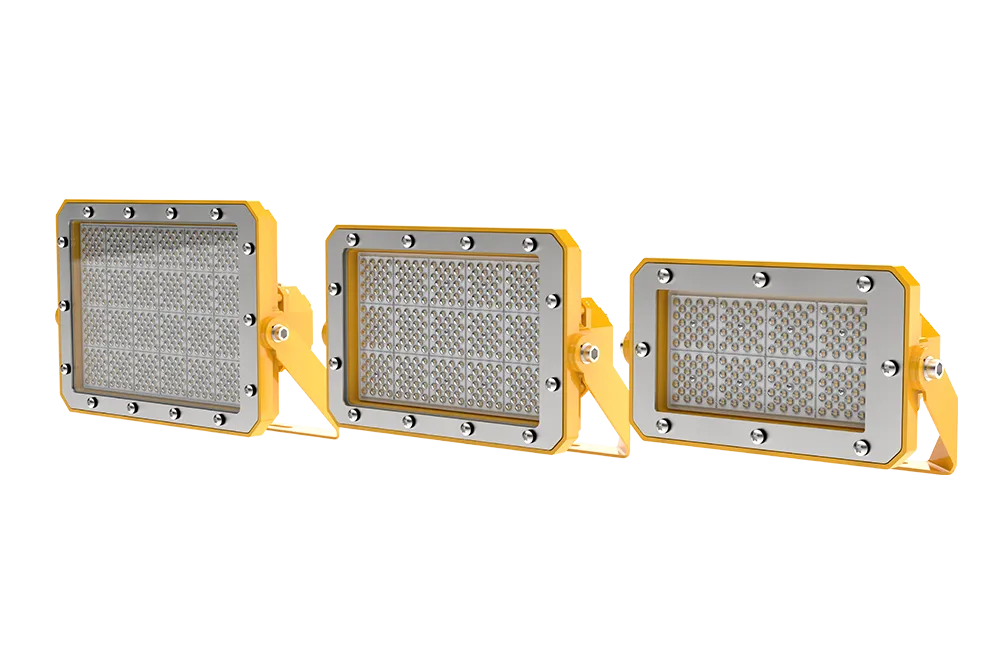
Explosion Certified Perilous Setting Unsafe Proof} Luminaires are intentionally crafted lighting methods built to function safely within conceivably inflammable areas. These robust fixtures block sparks, thermal energy and static currents from initiating a severe explosion. They habitually incorporate novel designs, involving like impermeable housings and naturally safe power items to provide safety codes in businesses like oil & gas processing, production plants, extraction operations, and healthcare production.
Choosing the Best Blast-Proof Systems for Risky Properties
Choosing the correct fire-safe units for a defined classified space needs careful analysis. Variables such as the designation (e.g., Type I, II, or III and divisions A) ought to be correctly examined to ensure observance with corresponding safety guidelines. Over and above the location’s fundamental liabilities, assess external states, such as thermal state and condensation, to find a long-lasting and dependable method. Frequently confide in a professional authority to guide your choice.
Zones Where Mandate Explosion Proof Lights?
Explosion-proof or: intrinsically safe|hazardous location|Class-rated} luminaries are unequivocally needed in multiple areas where hazardous substances or dust could likely create a explosive atmosphere. This commonly includes refinery handling plants, protective layer application areas, foodstuff handling facilities, and wastewater treatment sites. Regulations, such as those from NFPA and NFPA, require their deployment in these sites to reduce the risk of flames and protect security functionality.
Pros of Photon Emitting in Ignition Proof Systems
Embracing Crystal-Based technology for detonation-safe systems offers a important collection of pros. First, photon emitters boast a considerably longer service life compared to traditional filament bulbs, reducing upkeep costs and downtime. They are also originally safer, producing offset thermal flux which lowers the possibility of sparking in hazardous atmospheres. What is more, crystal lights are progressively effective in power use, leading to reduced electricity outlays and a cut down carbon impact. Finally, the tough fabrication of Luminescent lighting systems withstanding the rigorous settings typical of explosion proof areas.
- Augmented Service Life
- Lower Overhaul Fees
- Improved Precaution
- Decreased Watt Draw
- Increased Stability
Sustaining and Inspecting Explosion Proof Lighting Systems
Consistent servicing and in-depth review of explosion-proof lighting configurations are critically fundamental for guaranteeing defense and mitigating potential pitfalls. This requires a recurrent review of all elements, such as lamps, lines, conductors, and attached terminal enclosures. Primarily, verify for wear, physical damage, and appropriate grounding. Besides, check that every indications explosion proof led lights are identifiable and that the light required by applicable guidelines.
- Implement visual checks.
- Analyze wire interfaces.
- Verify detonation resistance.
Advancing of Explosion Proof Lighting Technology
Developing landscape of explosion-proof fixtures technology signals a considerable shift from traditional designs. Future applications will widely incorporate smart capabilities, enabling virtual monitoring, diagnostics, and responsive control. We project a heightened adoption of LED technology, not only for its intrinsic energy efficiency, but also its potential to facilitate incorporated sensors for observing toxic conditions. What is more, materials inspection is encouraging innovations in long-lasting housing materials, allowing for lighter and optimized designs, while preserving the necessary levels of protection.
- Enhanced battery life for mobile applications.
- Merge with preventive maintenance frameworks.
- Innovation of automated lens systems.