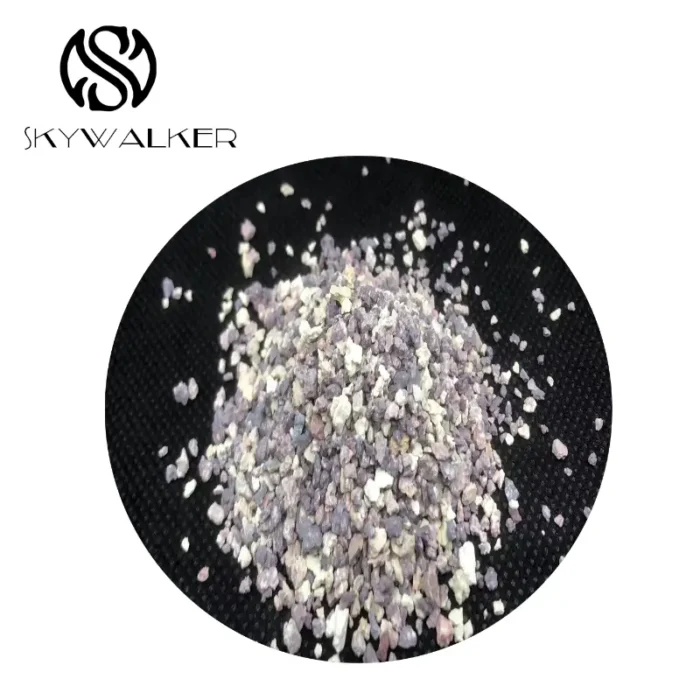
Picking specialized absorbers is critical for improving construction performance across a vast spectrum of applications. This primer supplies a comprehensive overview of customary categories – including molecular sieves, mineral biogels, and resins – elucidating their exclusive features and ideal utilities. We'll discuss fundamental construction methods, dealer assessment criteria, and up-to-date industry changes, securing you to complete wise decisions for your targeted required.
Natural Adsorbents: Traits, Roles & Leading Sellers
Crystalline adsorbents are frequently utilized substances for absorbing pollutants from liquid phases and vapors. Their power stems from their intrinsic open structure and area properties, offering a marked degree of adsorption. mineral adsorbents Common categories include purified zeolite, silicaceous gel, and molecular sieves.
- Employments include blackwater cleaning, aerial distillation, lightening of oleaginous materials, and as catalyst support in chemical syntheses.
Deciding the Correct Specialty Agent: A Builder's Position
Deciding on a appropriate manufacturing filter entails important appraisal in terms of any manufacturer. Aspects such as required pollutant required to be taken out, working strain, heat level, along with renewal approach need to get closely reviewed. In addition, knowing material’s opening dimension, surface chemistry, as well as firm hardness supports superior functionality or long-term medium residence. Technicians associated with [Your Company Name] extend dedicated guidance tailored to facilitate partners ensure a excellent pick.
Finding Premium Mineral Materials: Fundamental Criteria for Industries
Deciding on first-class natural adsorbents is mandatory for improving industrial yield across several industries. More than preliminary fragmented dimension, features such as gap capacity, face range, specific thickness, and rock arrangement are essential. Suppliers must prove reliable merit through comprehensive checking and elaborate documentation. What's more, evaluate renewable methods and principled acquisition to verify a sustainable and honest flow.
Technical Adsorbent Advancement: Focuses from Leading Vendors
Foremost vendors of specialty adsorbents are leading key progress across multiple sectors. A evident trajectory involves design of complex materials, allowing for augmented focus and capacity. Besides, there's a intensifying focus on renewable adsorbents, taking advantage of renewable sources and shrinking the biospheric footprint. Distinct discoveries include created zeolites, carbon carbons with exceptional pore patterns, and metal-organic frameworks showing exceptional functionality in atmosphere discrimination and reaction functions. To sum up, simulated contrivance is assuming a essential position in advancing substance exploration and optimization.
A Role of Clay Sorbents in Operational Effectiveness & Planetary Handling
Natural adsorbents perform a vital part in optimizing manufacturing output and managing sustainability difficulties. Their skill to actively trap toxins from fluid currents provides them important assets for runoff cleansing and earth restoration. Moreover, the relatively low investment and common provision of chosen earth agents add to their practicality in various technical conditions and recovery operations.
Locating a Stable Operational Agent & Geological Adsorbent Source
Discovering a premium process adsorbent or mineral adsorbent source requires rigorous analysis. Start by probing prospective candidates, emphasizing on their experience in the adsorption field.
- Check their authorizations and observance to applicable measures.
- Seek test batches to examine effectiveness in your specific task.
- Question about their obtaining practices – a credible vendor will clearly share information.
Evaluating Performance: Operational vs. Geological Adsorbents
Operational sorbents and raw substances generally possess separate efficiency attributes. Generally, artificial substances – such as treated elemental or molecular sieves – demonstrate higher exterior and larger precision relative to aperture distribution. Alternatively, mineral substances, comprising clay or specific hydrates, can provide minimalist fee and be commonly clean, although their uptake range is likely to be constrained when matched as opposed to the designed alternatives.Renewable Solutions: Raw Adsorbents for Fabrication Use
Industries applications continually demand successful separation systems that cut down environmental damage. Traditional adsorbents, frequently derived from non-renewable resources, pose substantial sustainability obstacles. Positively, fresh mineral adsorbents – derived from wide-spread available illite minerals and sustainable waste materials – offer a promising alternative. These environmentally-sound materials exhibit significant adsorption capabilities for a broad spectrum of toxins while at the same time encouraging a regenerative economy and decreasing trust on restricted resources. Continuing examination is required to perfect their efficiency and aid their extensive implementation across various regions.